
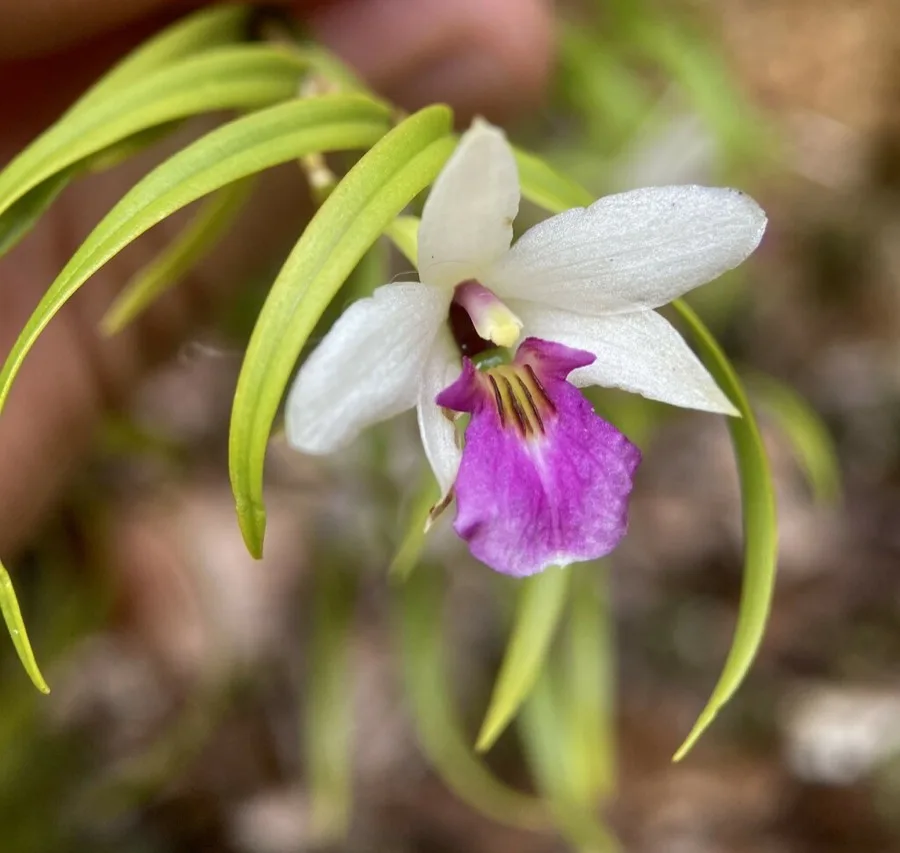
- Approximate light
- 2000–3000 fc
- Day temperature
- 18–30 °C
- Relative humidity
- 50–70%
This is general guidance by genus. Species, hybrids, potting mix and your home conditions may call for different care. Check moisture and actual growth before following a schedule.
Light and position
Plenty of light with some direct morning sun. In shade it grows tall and thin and never blooms.
When and how to water
During growth, water with good drainage and adjust drying to your group. Nobile types usually need less water after canes mature. Warm-growing groups should not automatically receive the same dry rest.
Potting mix and container
Fine or medium bark in a small pot; also thrives mounted on cork.
Feeding during growth
Feed fortnightly from spring to autumn and stop completely in winter.
When to repot
Repot when the mix breaks down or growth outgrows the pot, preferably as new roots emerge. Choose a container suited to the root system, without excessive wet mix around it.
Dormancy and seasonal changes
Nobile types demand six to eight weeks of winter at 10–15 °C, nearly dry and unfed. Without that chill they produce keikis instead of flowers.
Flowering and new growth
Flower position depends on the group: nobile types can bloom from nodes on mature canes, while phalaenopsis types produce flower spikes. A leafless cane may still store reserves or flower again. Check the specific group: a cooler, drier rest can help mature nobile types, but it is not a recipe for every Dendrobium.
What to watch for
Do not cut a firm cane just because it lost leaves. Distinguish healthy tissue from dry or rotten tissue and confirm the group before imposing cold or drought.
A FloraFlor care guide based on its app library, with editorial revisions for the web. Sources and further reading: American Orchid Society · Dendrobium General Culture Sheet · American Orchid Society · Phalaenopsis and Semi-Antelope Types. No affiliation or endorsement is implied.
Let your plant set the pace
Save your Dendrobium in FloraFlor, note when you watered it and record photos of its changes. Adjust reminders to your season and hemisphere, and log care after you have actually done it.
← See all orchid care guides