
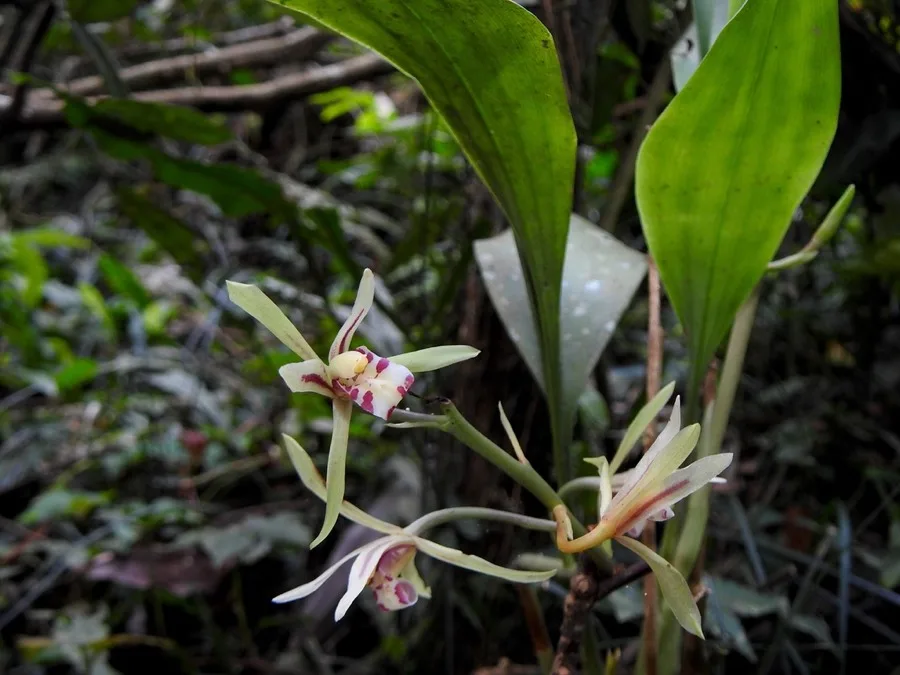
- Approximate light
- 3000–5000 fc
- Day temperature
- 18–28 °C
- Relative humidity
- 45–65%
This is general guidance by genus. Species, hybrids, potting mix and your home conditions may call for different care. Check moisture and actual growth before following a schedule.
Light and position
The most light-hungry orchid here: outdoors in summer, half shade, with direct morning sun.
When and how to water
Plenty of water in summer while new growths push. In winter, just enough to keep the mix from drying out entirely.
Potting mix and container
A coarse mix of bark, perlite and some peat — more moisture-retentive than a Cattleya's.
Feeding during growth
High-nitrogen feed until midsummer, then switch to a high-potash one to push the spikes.
When to repot
Every two or three years, after flowering. It is heavy and fills a pot forcefully — use a sturdy container.
Dormancy and seasonal changes
Needs six autumn weeks with 8–12 °C nights. Leave it outside until frost threatens — that chill is what triggers the spike.
Flowering and new growth
Spikes of fifteen to twenty waxy flowers lasting eight to ten weeks. Stake the spike once it is a hand tall. Many common hybrids need cool nights and good light to initiate spikes. A bright, cool indoor space can work; a warm, dim one may prevent flowering. Requirements vary by species and hybrid: check its guidance and actual temperatures.
What to watch for
A warm room year-round can make flowering difficult for cool-growing hybrids. Do not treat this as the only possible cause or expose the plant to frost to induce blooms.
A FloraFlor care guide based on its app library, with editorial revisions for the web. Sources and further reading: American Orchid Society · Cymbidium Culture. No affiliation or endorsement is implied.
Let your plant set the pace
Save your Cymbidium in FloraFlor, note when you watered it and record photos of its changes. Adjust reminders to your season and hemisphere, and log care after you have actually done it.
← See all orchid care guides