
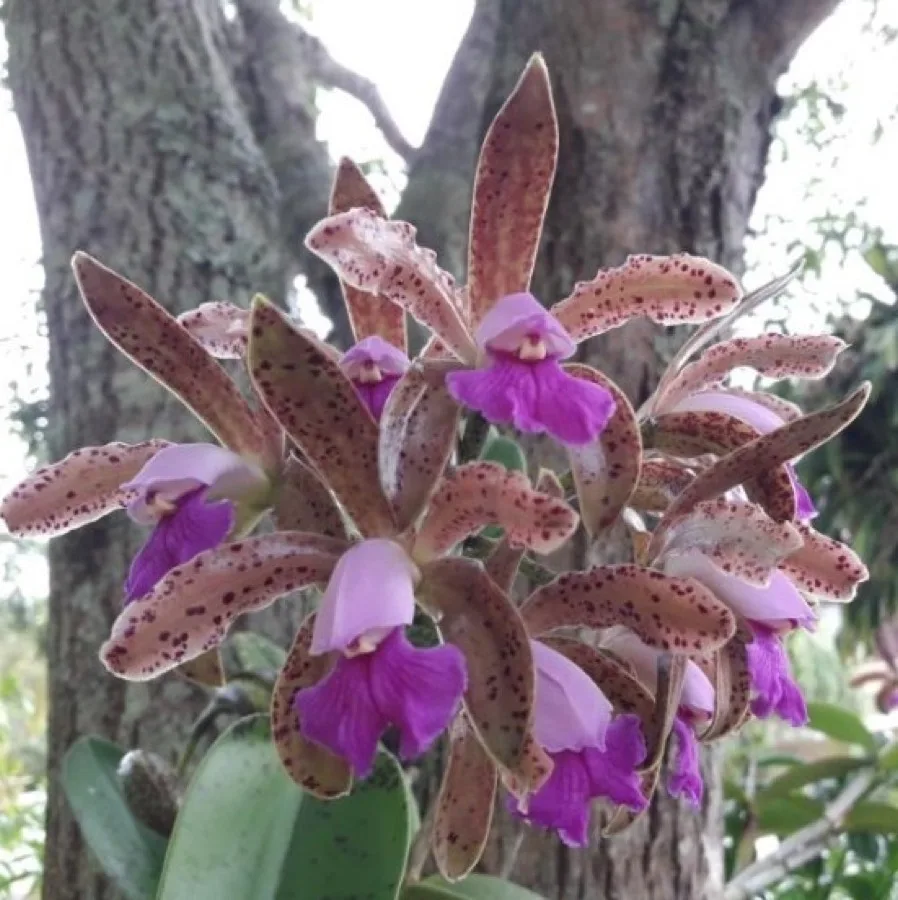
- Approximate light
- 2500–3500 fc
- Day temperature
- 21–30 °C
- Relative humidity
- 50–70%
This is general guidance by genus. Species, hybrids, potting mix and your home conditions may call for different care. Check moisture and actual growth before following a schedule.
Light and position
Strong light: a north window in the southern hemisphere, with gentle direct morning sun. A healthy leaf is apple green, not dark green.
When and how to water
Soak, then let it dry out completely. The pseudobulb is its canteen: it takes drought far better than overwatering.
Potting mix and container
Coarse bark, very open, in a clay pot that dries fast.
Feeding during growth
Feed fortnightly while the new growth pushes; stop once the sheath is formed and growth halts.
When to repot
Repot only when the new growth reaches over the pot rim, just before new roots appear. Outside that window the plant sulks for a year.
Dormancy and seasonal changes
Rest varies with species and hybrid. Reduce water and feed when growth slows, without dehydrating the pseudobulbs. Do not impose drought on a plant still producing roots.
Flowering and new growth
Flowers emerge from a green sheath at the tip of the new pseudobulb. They last one to three weeks and are usually fragrant by day. It will not bloom without light. A thin new pseudobulb and a dark leaf is the diagnosis.
What to watch for
A wrinkled pseudobulb can accompany dehydration or root loss. Check roots and mix before increasing watering: this symptom alone does not establish the cause.
A FloraFlor care guide based on its app library, with editorial revisions for the web. Sources and further reading: American Orchid Society · Orchid care. No affiliation or endorsement is implied.
Let your plant set the pace
Save your Cattleya in FloraFlor, note when you watered it and record photos of its changes. Adjust reminders to your season and hemisphere, and log care after you have actually done it.
← See all orchid care guides